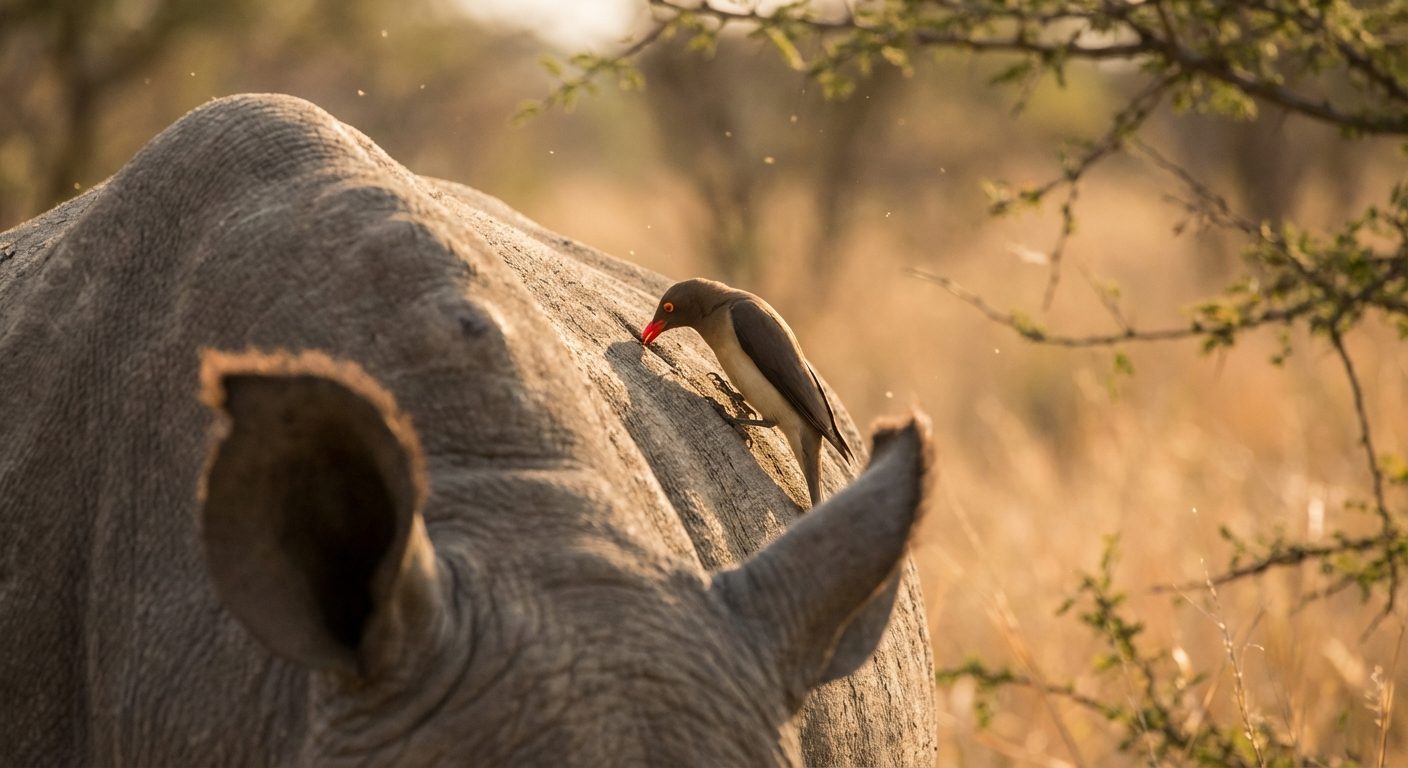
In the vast savannas of Africa, a remarkable partnership exists between one of the world's largest land animals and one of its smallest birds. The oxpecker, a bird barely larger than your thumb, has become an unexpected guardian of endangered rhinoceroses. While poaching and habitat loss threaten rhino populations, these industrious little birds work tirelessly to protect their massive hosts from parasites and, more importantly, from the deadly consequences of human interference. Their story reveals how nature's solutions often come in the smallest packages.
Understanding the Oxpecker: Nature's Tiny Protector
The oxpecker belongs to the family Buphagidae and comprises just three species found across Africa and Madagascar. These small birds, weighing no more than 50 grams, possess an outsized importance in the ecosystem. With their sharp beaks and keen eyes, oxpeckers have evolved a specialized lifestyle that makes them indispensable to their larger companions.
What makes oxpeckers truly remarkable is their feeding behavior. They spend their entire day perched on the bodies of large mammals, including rhinoceroses, zebras, buffalo, and giraffes. Rather than viewing these animals as threats, oxpeckers have developed an intimate relationship with their hosts, one based on mutual benefit that has endured for thousands of years.
The Parasitic Problem: Why Rhinos Need Help
Rhinoceroses, despite their impressive size and strength, face constant challenges from parasites and ticks. In the African bush, these tiny creatures pose significant health risks. Ticks burrow into the skin of rhinos, causing infections, transmitting diseases, and creating open wounds that can become severely infected. For an animal that weighs several tons but cannot easily reach many parts of its own body, this becomes a serious problem.
The parasite burden on wild rhinos can be enormous:
- Thousands of ticks covering a single animal
- Risk of tick-borne diseases like babesiosis and theileriosis
- Secondary infections from scratching and irritation
- Reduced overall health and immunity
- Weakened ability to survive in harsh conditions
This is where the oxpecker steps in as nature's veterinarian, consuming up to 100 ticks per day from a single host animal.
The Warning System: Eyes and Ears in the Bush
Beyond their role as parasitic cleaners, oxpeckers provide something even more crucial to rhinos in today's dangerous world: they serve as an early warning system against human poachers. This adaptation has become increasingly vital as rhino populations face unprecedented threats from illegal hunting.
When danger approaches, oxpeckers become agitated and vocal. Their distinctive alarm calls alert their hosts to potential threats long before the rhino would detect them independently. This heightened vigilance has become a matter of life and death, as poachers often work under cover of darkness or at great distances, making it difficult for rhinos to sense their presence in time.
How the Alert System Works
The relationship between oxpeckers and rhinos demonstrates sophisticated communication:
- Behavioral cues: Oxpeckers change their movement patterns when sensing danger
- Vocalizations: Distinct alarm calls that rhinos have learned to recognize and respond to
- Timing: Early alerts give rhinos crucial minutes to move away from danger
- Reliability: Years of coevolution have made this system highly effective
The Poaching Crisis: When Every Advantage Matters
The African rhinoceros faces one of the most severe conservation crises of our time. Between 2008 and 2015, poaching reached catastrophic levels, with over 1,300 rhinos killed annually in South Africa alone. The situation became so dire that some subspecies came perilously close to extinction.
During this dark period, conservationists noticed something remarkable: rhinos with oxpecker companions had better survival rates than those without. While the difference might seem marginal, in a species fighting for its very existence, every advantage matters.
The oxpecker's warning system provided rhinos with precious extra seconds to flee. In some cases, this meant the difference between life and death. A rhino alerted by its avian guardian could move away from poachers' approach, while an unprotected animal might be caught unaware.
The Broader Ecosystem Connection
Understanding the oxpecker-rhino relationship reveals something profound about African ecosystems: no species exists in isolation. The health of the rhinoceros depends not just on large-scale conservation efforts, but on the integrity of the entire ecological web surrounding it.
When we protect rhinos, we simultaneously protect:
- Oxpecker populations that depend on them for food and habitat
- The broader savanna ecosystem that supports both species
- The balance of predator-prey relationships
- The natural checks and balances that maintain ecosystem health
This interconnectedness means that conservation efforts must look beyond single-species protection. Saving the rhinoceros means preserving the oxpecker's habitat and the relationship between them.
Conservation Implications and Modern Challenges
The oxpecker-rhino partnership faces new threats in the modern world. As humans increasingly encroach on natural habitats and as poaching pressures mount, the conditions that allowed this relationship to flourish are deteriorating. Additionally, some conservation practices, such as the use of pesticides and veterinary treatments on rhinos, can inadvertently harm oxpecker populations.
Modern conservation strategies must account for these symbiotic relationships. Protected areas must be large enough to support healthy populations of both species. Anti-poaching efforts need to be comprehensive and sustained. And critically, local communities must be engaged in conservation efforts, as they hold the key to long-term success.
The Lesson from a Tiny Guardian
The oxpecker's role in protecting rhinoceroses from human threats teaches us that conservation is rarely straightforward. Sometimes the most powerful solutions come not from human intervention, but from respecting and preserving the natural relationships that have evolved over millennia.
As we face the challenge of saving endangered species, the oxpecker reminds us that every creature, no matter how small, plays a vital role. These tiny birds, working tirelessly on the backs of rhinos, represent hope that nature's own systems can help us address even the most pressing conservation challenges.
The partnership between oxpecker and rhinoceros is not merely a curiosity of nature. It is a testament to the resilience of life and a powerful argument for protecting entire ecosystems rather than focusing narrowly on individual species. In protecting this relationship, we protect the rhinos themselves.