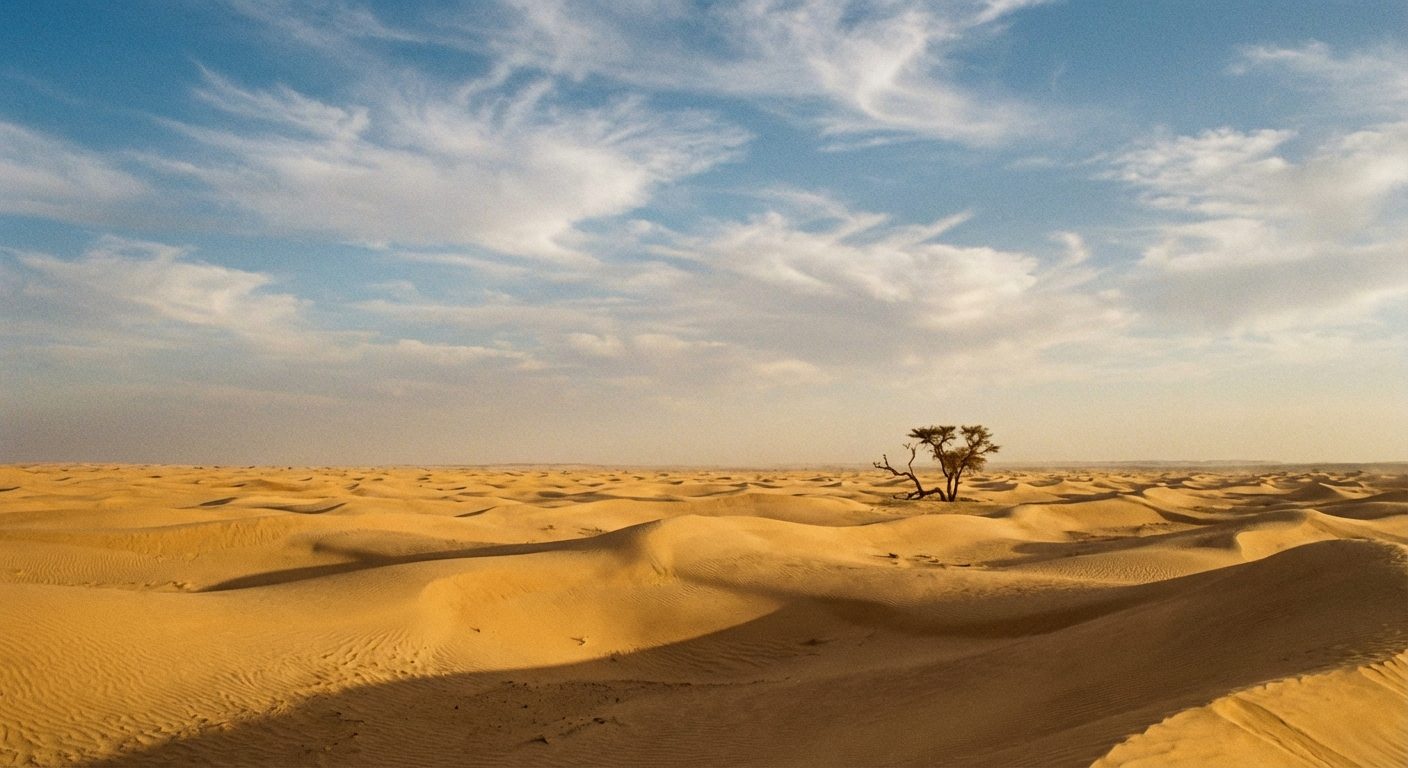
A Desert in Transition
The Sahara Desert, one of the world's most iconic landscapes, may be on the brink of a dramatic transformation. Recent scientific research suggests that increased precipitation patterns could fundamentally reshape this vast ecosystem, triggering cascading effects across the African continent. This discovery has sparked significant concern among climate scientists and environmental experts who are closely monitoring how these changes could reshape Africa's future.
The implications extend far beyond the desert itself. A transformation of the Sahara would affect weather patterns, agriculture, water availability, and the livelihoods of millions of people across Africa. Understanding this potential shift is crucial for policymakers and communities preparing for an uncertain climate future.
What the Research Reveals
A comprehensive study conducted by leading climate researchers has uncovered troubling evidence about rainfall patterns in the Sahara region. The findings indicate that excessive precipitation, driven by climate change, could fundamentally alter the desert's hydrological balance.
Key Findings from the Study
The research highlights several critical points:
- Increased moisture patterns: Climate models show higher atmospheric moisture concentrations over the Sahara region
- Vegetation expansion: Greater rainfall could trigger rapid vegetation growth in currently barren areas
- Ecosystem restructuring: Desert ecosystems would experience unprecedented changes in biodiversity and species distribution
- Feedback mechanisms: These changes could create self-reinforcing cycles that accelerate transformation
Scientists emphasize that while some rainfall in arid regions might seem beneficial, the rapid pace and magnitude of these changes pose significant risks to established ecosystems and human communities.
The Sahara's Current State and Historical Context
To understand the potential impact, it's important to recognize the Sahara's current characteristics. The world's largest hot desert spans approximately 9 million square kilometers across North Africa. For millennia, it has maintained a relatively stable, extremely arid climate.
However, the Sahara hasn't always been a desert. Paleoclimatic evidence reveals that approximately 6,000 years ago, the region experienced a much wetter climate known as the African Humid Period. During this time, the Sahara supported lush vegetation, abundant wildlife, and thriving human civilizations. This historical precedent suggests that dramatic environmental shifts are indeed possible in this region.
The question now is whether excessive rainfall could trigger a return to such conditions, and what consequences this would bring to modern Africa.
Potential Consequences for Africa
The transformation of the Sahara would have far-reaching implications across the African continent. These effects would ripple through multiple interconnected systems.
Climate and Weather Patterns
Increased vegetation in the Sahara would alter local and regional climate dynamics. More plant coverage means greater evapotranspiration, which could influence rainfall patterns across West and Central Africa. This feedback mechanism might intensify or redirect monsoon systems, affecting agricultural regions thousands of kilometers away.
Agricultural Impacts
Africa's agricultural sector would face unprecedented challenges and opportunities:
- Crop production zones: Traditional farming areas could experience altered rainfall patterns, making current agricultural practices obsolete
- Food security: Millions dependent on stable rainfall patterns could face severe food insecurity
- New agricultural opportunities: Some regions might become newly arable, though adaptation would require significant investment
- Water competition: Increased vegetation would demand more water resources, potentially creating conflicts
Water Resources and Availability
The Sahara transformation would dramatically affect water availability across North and West Africa. Aquifers that have remained relatively stable for centuries could experience rapid depletion or unexpected recharge. Communities that have adapted to extreme water scarcity would face entirely new challenges in managing abundance or managing rapid changes in water availability.
The Mechanism Behind Excessive Rainfall
Understanding why excessive rainfall might occur is essential to grasping the severity of this threat.
Climate Change Drivers
Global warming intensifies the hydrological cycle, meaning the atmosphere can hold and transport more moisture. Warmer ocean temperatures around Africa increase evaporation, creating more moisture-laden air masses. When these systems move over the Sahara, they could deposit unprecedented amounts of precipitation.
Feedback Loops
A particularly concerning aspect is the potential for self-reinforcing feedback mechanisms. If vegetation expands due to increased rainfall, these plants would further increase moisture in the atmosphere through evapotranspiration. This could create a positive feedback loop where initial rainfall changes lead to vegetation growth, which then encourages even more rainfall.
Implications for African Communities
The human dimension of this potential transformation cannot be overlooked. Millions of Africans would face direct consequences.
Migration and Displacement
Rapid environmental change could trigger unprecedented migration patterns. Communities adapted to desert life might need to relocate. Simultaneously, the newly vegetated areas might attract population movements, creating new pressures on infrastructure and resources.
Economic Disruption
Pastoral economies across the Sahel region depend on carefully balanced ecosystems. Rapid transformation could devastate livestock-dependent communities while creating new economic opportunities in emerging agricultural zones. The transition period would be economically painful for many.
Infrastructure Challenges
Existing infrastructure, from roads to water systems, has been designed for current environmental conditions. A transformed Sahara would render much of this infrastructure obsolete, requiring massive investment in redesign and reconstruction.
Scientific Uncertainty and Research Gaps
While the research is compelling, scientists acknowledge significant uncertainties in predicting exactly how and when these changes might occur.
The complexity of climate systems means that predicting regional precipitation changes remains challenging. Different climate models produce varying projections, and the interplay between global climate patterns and regional factors creates multiple possible outcomes.
Further research is essential to refine these projections and improve our understanding of the mechanisms driving potential Sahara transformation.
What Needs to Happen Now
Addressing this potential crisis requires immediate action across multiple fronts.
Enhanced Monitoring
Establishing comprehensive monitoring networks across the Sahara region would provide early warning of significant changes. Satellite technology, ground-based sensors, and climate modeling should work in concert to track precipitation patterns, vegetation changes, and ecosystem responses.
Adaptive Planning
African nations must begin developing adaptive strategies now. This includes water management plans, agricultural diversification programs, and infrastructure flexibility that can accommodate environmental changes.
International Cooperation
The potential Sahara transformation is a continental challenge requiring coordinated international response. Climate mitigation efforts, knowledge sharing, and financial support from developed nations are essential.
Community Engagement
Local communities possess invaluable knowledge about their environments. Incorporating traditional ecological knowledge with modern science creates more robust and culturally appropriate adaptation strategies.
Looking Forward
The possibility of excessive rainfall transforming the Sahara represents one of Africa's most significant climate challenges. While some might view increased rainfall in a desert as beneficial, the reality is far more complex. Rapid, large-scale environmental transformation threatens existing ecosystems, disrupts established human communities, and creates new challenges that societies may struggle to manage.
The research serves as a wake-up call. Africa must prepare now for potential climate scenarios that could reshape the continent's geography, economy, and social fabric. By investing in research, developing adaptive strategies, and building resilient communities, African nations can better navigate whatever environmental changes lie ahead. The time for proactive preparation is now, before excessive rainfall potentially transforms the Sahara and reshapes Africa's future.